MENU

Efficient Power Design for Regenerative Energy

Optimize AMR/AGV Runtime and Power Systems with Supercapacitors (EDLCs)

Instantly capture regenerative energy from braking to suppress peak power and extend runtime.

Reduce instantaneous load and thermal stress on batteries—achieving longer life, extended maintenance intervals, and stable operation.

  • AMR
  • Regenerative energy
  • AGV
  • Regenerative braking
  • Supercapacitor
  • EDLC
  • Energy reuse design
  • Peak power reduction
  • Heat dissipation measures
  • Mobile robots
  • Battery life extension
  • Maintenance reduction
  • AMR energy saving
  • AGV power circuit efficiency

Shipment Record (cells)

100,000,000+

units

Download Here (Free)

Kick-start your technical evaluation and comparison process.
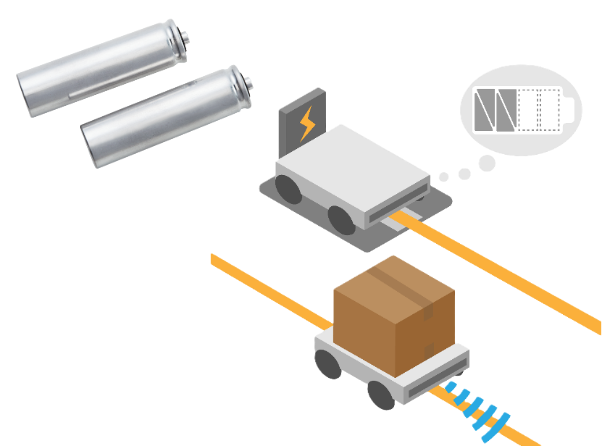
AboutChanneling Stopping Power into the Next Drive.
Turn Regenerative Energy into Reusable Power.

AMR AGV EDLC-6-1

A Power Assist Solution for AMRs/AGVs: Extended Runtime, Energy Savings, and Longer Battery Life.

In AMR/AGV systems, regenerative energy is typically dissipated as heat through braking resistors. This creates challenges for energy efficiency, runtime, and operational costs.

By integrating Panasonic's Supercapacitors (Electric Double Layer Capacitors / EDLCs) into the power system, you can create an architecture that instantly recovers unused energy and reuses it during acceleration. This suppresses peak power while simultaneously extending runtime and reducing energy consumption (e.g., 1.5× continuous runtime increase and approximately 200 Wh/day reduction under representative conditions).

Supercapacitors rely on physical charge/discharge with no chemical reactions, making them highly resistant to high-frequency cycling. They reliably capture regenerative peaks on the order of milliseconds to seconds. They maintain stable performance even at -20°C or lower, enabling deployment in cold storage and other harsh environments.

As a result, instantaneous load and heat generation on the main battery are leveled (peak shaving). This extends battery life, reduces maintenance burden, and improves system reliability.
Starting your research?

Access the comprehensive guide covering specs, features, and application examples—all in one document.

ProblemDo these challenges sound familiar?

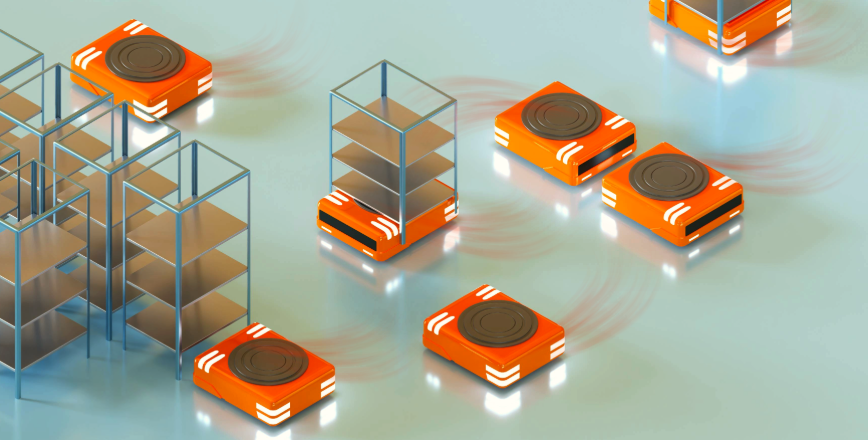
Regenerative Energy Wasted as Heat

Regenerative Energy Wasted as Heat
  • Phenomenon: Regenerative energy during deceleration is dissipated by braking resistors, increasing charging cycles and heat generation.

  • Impact: Reduced energy efficiency (kWh/km), shortened battery life from frequent charging, and elevated system temperatures.

  • Result: An optimal circuit architecture and energy storage device capable of recovering and reusing energy without delay is required.

Peak Currents, Heat Generation, and Power Circuit Stability

Peak Currents, Heat Generation, and Power Circuit Stability
  • Phenomenon: High-rate peak currents during acceleration and deceleration concentrate on the battery, causing IR drop, voltage fluctuations, heat generation, and stability risks.

  • Impact: Stable operation requires careful attention to ripple noise suppression, IR drop management, and voltage balancing during series connection.

  • Result: Peak current buffering capable of handling instantaneous high currents, with robust design guidelines for series balancing and temperature compensation, is required.
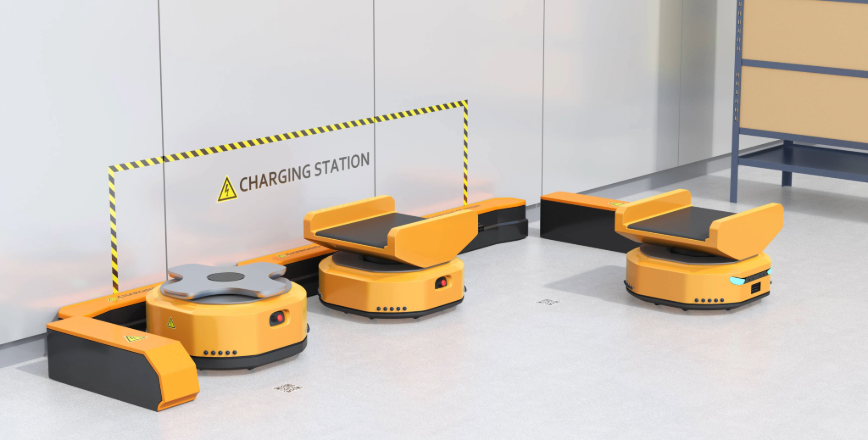
Storage Device Reliability and Maintenance Burden

Storage Device Reliability and Maintenance Burden
  • Phenomenon: Storage device lifespan and ESR fluctuate significantly with temperature, applied voltage, and ripple current. This necessitates strict temperature management and design margins.

  • Impact: Beyond addressing abnormal heat and environmental factors (humidity, salt damage), fail-safe design based on FMEA is essential.

  • Result: Long-term supply availability, detailed reliability data (life curves, temperature characteristics), and technical support directly impact device adoption decisions. Comprehensive evaluation resources and application notes are also critical.

Starting your research?

Access the comprehensive guide covering specs, features, and application examples—all in one document.

Point / SolutionIntegrate Supercapacitors into the power system to convert regenerative energy into drive power instead of waste heat—improving runtime, efficiency, and maintainability.


point_01_992x660
01

Extended Runtime and Energy Savings

Recover regenerative energy during deceleration and reuse it for acceleration. Under representative conditions, 1.5× continuous runtime and approximately 200 Wh/day reduction can be achieved, contributing to TCO (Total Cost of Ownership) reduction.

point_01_992x660
02

Battery Load Leveling for Extended Life

Supercapacitors absorb peak currents, suppressing waste heat from braking resistors. This reduces heat generation and degradation in the main battery while lowering overall power consumption.
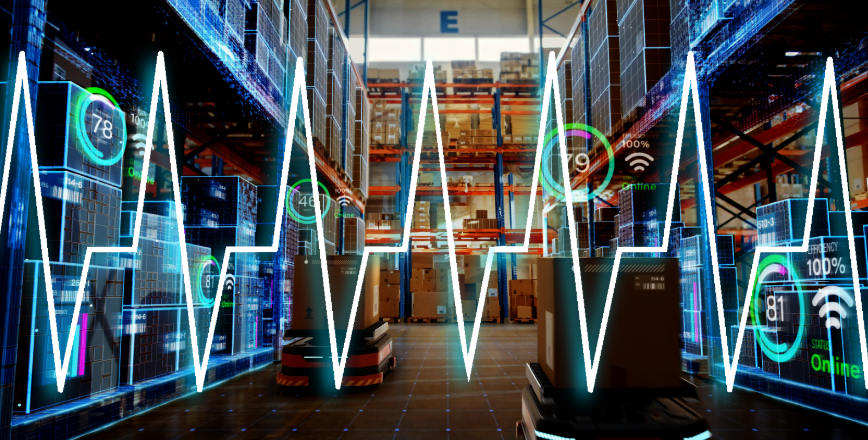
03

High-Speed Charge/Discharge: Capturing Instantaneous Peaks

Supports charge/discharge on the order of milliseconds to seconds, reliably capturing instantaneous energy during acceleration and deceleration.

04

Stable Operation at Low Temperatures (-20°C and Below)

Maintains performance and safety in cold storage warehouses and similar environments, meeting strict operational requirements.

05

Long Life and High Reliability: Reduced Maintenance

Physical energy storage without chemical reactions supports over 1 million charge/discharge cycles. Reliability backed by over 100 million cells deployed in automotive applications translates directly to reduced maintenance burden.

Maximize Operational Efficiency Through Energy Reuse

Continuous Runtime
Up to 1.5×

Daily Energy Reduction
Approximately 200Wh

Source: Panasonic research.
Note: The above are estimated ranges based on internal evaluations using representative configurations and conditions. Actual effects depend on EDLC capacitance, load profile, etc. (Calculated based on recovering regenerative energy with EDLCs and reusing it for the next acceleration).

Extended Life Through Proper Derating Design

Life Extension (10°C Rule)
Approximately 2×

Life Extension (5.5 V → 3.3 V)
Approximately 2.8×

Source: Panasonic research.
Note: The above are estimated ranges based on internal evaluations using representative configurations and conditions. Actual effects depend on EDLC capacitance, applied voltage, temperature, etc. (General design rules excluding some products like 85°C guaranteed items).

Stable Operation in Harsh Environments

Low-Temperature Stability
-20℃ and Below

Braking Resistor Heat
Significantly Reduced

Source: Panasonic research.
Note: The above are estimated ranges based on internal evaluations using representative configurations and conditions. Actual effects depend on EDLC capacitance, load profile, temperature, etc. (Facilitates rapid charge/discharge even at low temperatures, minimizing operational loss).

Starting your research?

Access the comprehensive guide covering specs, features, and application examples—all in one document.

FunctionKey Features

Key Features: Integrate Supercapacitors (EDLCs) into the AMR/AGV power system to instantly store and reuse regenerative energy from deceleration. As a peak current buffer, they enhance runtime, reduce energy consumption, and improve maintainability while suppressing heat generation.


Supports High Current and High-Speed Charge/Discharge

Supports High Current and High-Speed Charge/Discharge

Reliably captures regenerative peaks on the order of milliseconds to seconds for reuse during acceleration.

Stable in Low-Temperature Environments (-20°C and Below)

Stable in Low-Temperature Environments (-20°C and Below)

Enables rapid charge/discharge in cold storage environments, reducing operational stoppage risk.

Long Life and High Durability for Reduced Maintenance

Long Life and High Durability for Reduced Maintenance

Withstands over 1 million cycles due to chemical-reaction-free storage. Backed by over 100 million cells deployed in automotive applications.


Suppress Heat and Voltage Drop via Peak Mitigation

Suppress Heat and Voltage Drop via Peak Mitigation

Supercapacitors share instantaneous load with the power supply, reducing IR drop and enhancing stability.
Starting your research?

Access the comprehensive guide covering specs, features, and application examples—all in one document.

Application Examples


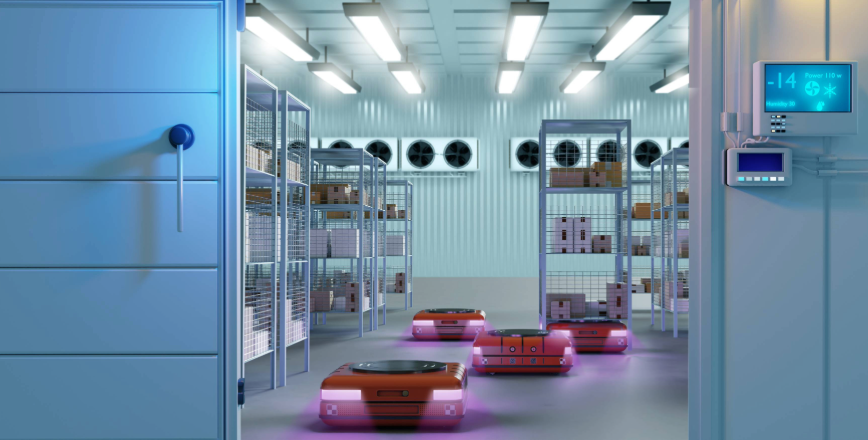
Cold Storage AMR for Inter-Shelf Transport (-20°C)

Cold Storage AMR for Inter-Shelf Transport (-20°C)

Placement:
Transporting picked goods between shelves in freezer environments with frequent acceleration-deceleration cycles.

Challenge:
Battery internal resistance rises at low temperatures, concentrating instantaneous peaks and causing heat generation and voltage drops. Regenerative energy is wasted as heat in braking resistors.

Solution:
Series-connected EDLCs with balancing circuits instantly recover regenerative energy during deceleration for reuse during acceleration. Leverages stable charge/discharge performance at low temperatures.

Observed Effects:
  • 1.5× continuous runtime and approximately 200 Wh/day energy reduction under representative conditions
  • Reduced cooling load through waste heat suppression


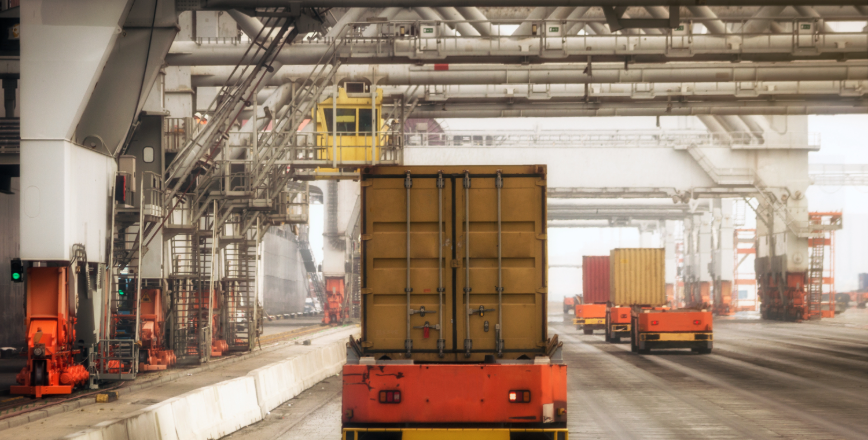
Heavy-Load Pallet Transport AGV (Peak Power Mitigation)

Heavy-Load Pallet Transport AGV (Peak Power Mitigation)

Placement:
Long-distance transport of 1-ton class pallets with high instantaneous currents during acceleration and climbing.

Challenge:
Peak currents concentrate on the battery, causing heat generation, voltage drop, and shortened life. Regenerative energy is lost as heat.

Solution:
EDLCs positioned as a peak power buffer superimpose output during acceleration to level battery load; regenerative energy charges the EDLC during deceleration.

Observed Effects:
  • Reduces battery heat generation and stabilizes operation, extending life by reducing charge cycle frequency
  • Enables thermal design applying standard derating rules: approximately 2× life per 10°C reduction; 1.3–2.8× life with voltage reduction
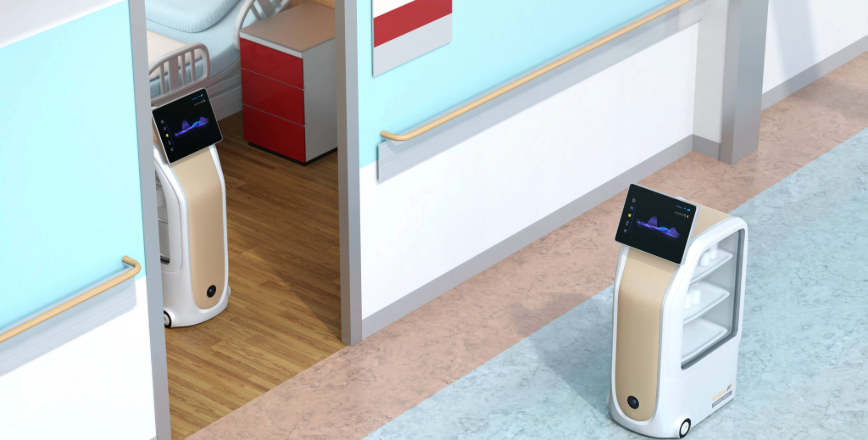
Hospital Transport Robot (Quiet Operation and Energy Efficiency)

Hospital Transport Robot (Quiet Operation and Energy Efficiency)

Placement:
Inter-floor transport of medicine and specimens requiring quiet, energy-efficient nighttime operation.

Challenge:
Regenerative energy is lost during frequent stop-and-go cycles, and battery margin is insufficient during nighttime non-charging periods.

Solution:
EDLCs capture and reuse regenerative energy to lower average power consumption and suppress heat through peak reduction. This enables operation with minimal cooling fan usage, reducing noise.

Observed Effects:

  • Reduced power consumption, extended runtime, and lower maintenance frequency through reduced battery stress
  • Leverages automotive-proven reliability for hospital deployment

Starting your research?

Access the comprehensive guide covering specs, features, and application examples—all in one document.

FAQ

Find answers to frequently asked questions below. 

Q.

What is the lifespan of a Supercapacitor?

A.

Internal testing confirms negligible capacitance degradation even after more than 1 million charge/discharge cycles. In actual usage, temperature and voltage are the main degradation factors; therefore, lifespan can be further extended by lowering the control voltage or the ambient temperature.

Q.

What are the safety measures against overcharging?

A.

Supercapacitors have significantly lower thermal runaway risk than lithium-ion batteries; however, overcharging can cause gas expansion and increased internal resistance. The recommended configuration includes overvoltage protection using: (1) an Overvoltage Detection IC, and (2) a Cell Balancer (passive resistor or active type).

Q.

Can they be connected in series to obtain high voltage?

A.

Yes. However, voltage imbalance can occur due to cell-to-cell variation, so a cell balancer must be implemented.

Q.

How is the performance in low-temperature environments (-40 °C)?

A.

At low temperatures, ion diffusion slows, increasing internal resistance. However, our wide-temperature series have verified data showing they maintain approximately 80% of their rated capacitance even at -40 °C.

Starting your research?

Access the comprehensive guide covering specs, features, and application examples—all in one document.

Lineup


Supercapacitor (EDLC) Cell Example

Supercapacitor (EDLC) Cell Example

  • # Automotive-grade
  • # High reliability
  • # High-temperature capable
  • # Long life
Max operating voltage : 3.0 V
Nominal Capacitance : 90 F
Internal resistance(AC) : 0.8mΩ

Endurance

: 65℃ 3.0V
1500hours

Size

: φ18 x L67.5mm

*This product is currently under development. Specifications are subject to change without notice.
 

AMR AGV EDLC-21
AMR AGV EDLC-19

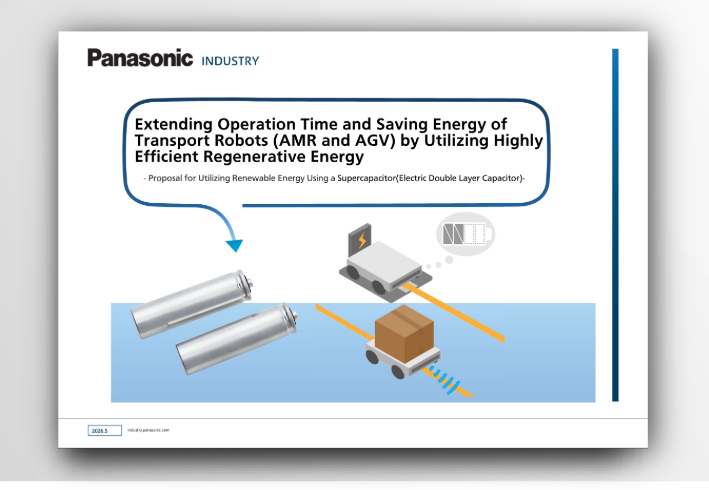
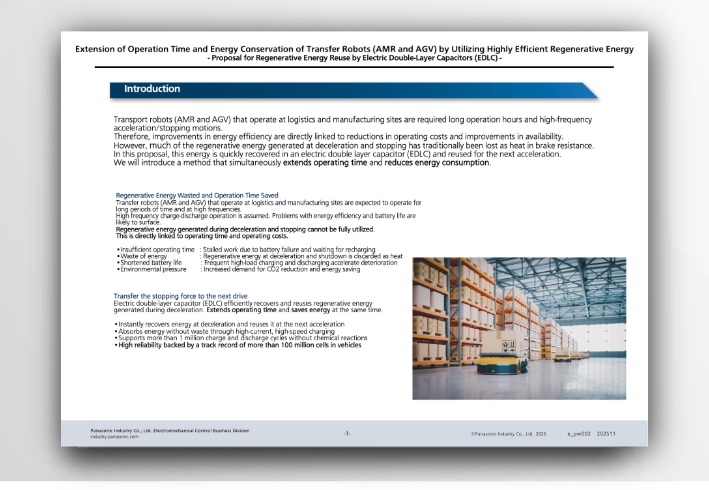
Extending Operation Time and Saving Energy of Transport Robots (AMR and AGV) by Utilizing Highly Efficient Regenerative Energy

- Proposal for Utilizing Renewable Energy Using Electric Double-Layer Capacitors (EDLC) -

Use this document as a foundation for design reviews and internal proposals.

  • Introduction
  • Use of motor regenerative energy to extend operating time and reduce energy consumption
  • Expected effects of using EDLC
  • Recovery and reuse of regenerative energy by EDLC
  • Panasonic Electric Double-Layer Capacitor Specifications
  • Summary and Future Outlook

Download Here (Free)

Kick-start your technical evaluation and comparison process.

Peak Shaving for AI Data Centers with Supercapacitors


Supercapacitors (EDLCs) for Robot Energy Regeneration